This lecture presents two recent collaborative artworks operating at the intersection of dance, virtual environments, and artificial intelligence. We will watch clips of the videos and performances and work-in-progress footage, discuss the technical and creative processes behind both pieces, and analyze how they reflect our current technological culture and society. This is a free public event. Wine and refreshments will be provided. This program has been organized by the Virginia Museum of Fine Arts and is supported, in part, by the Paul Mellon Endowment and the Jean Stafford Camp Memorial Fund.
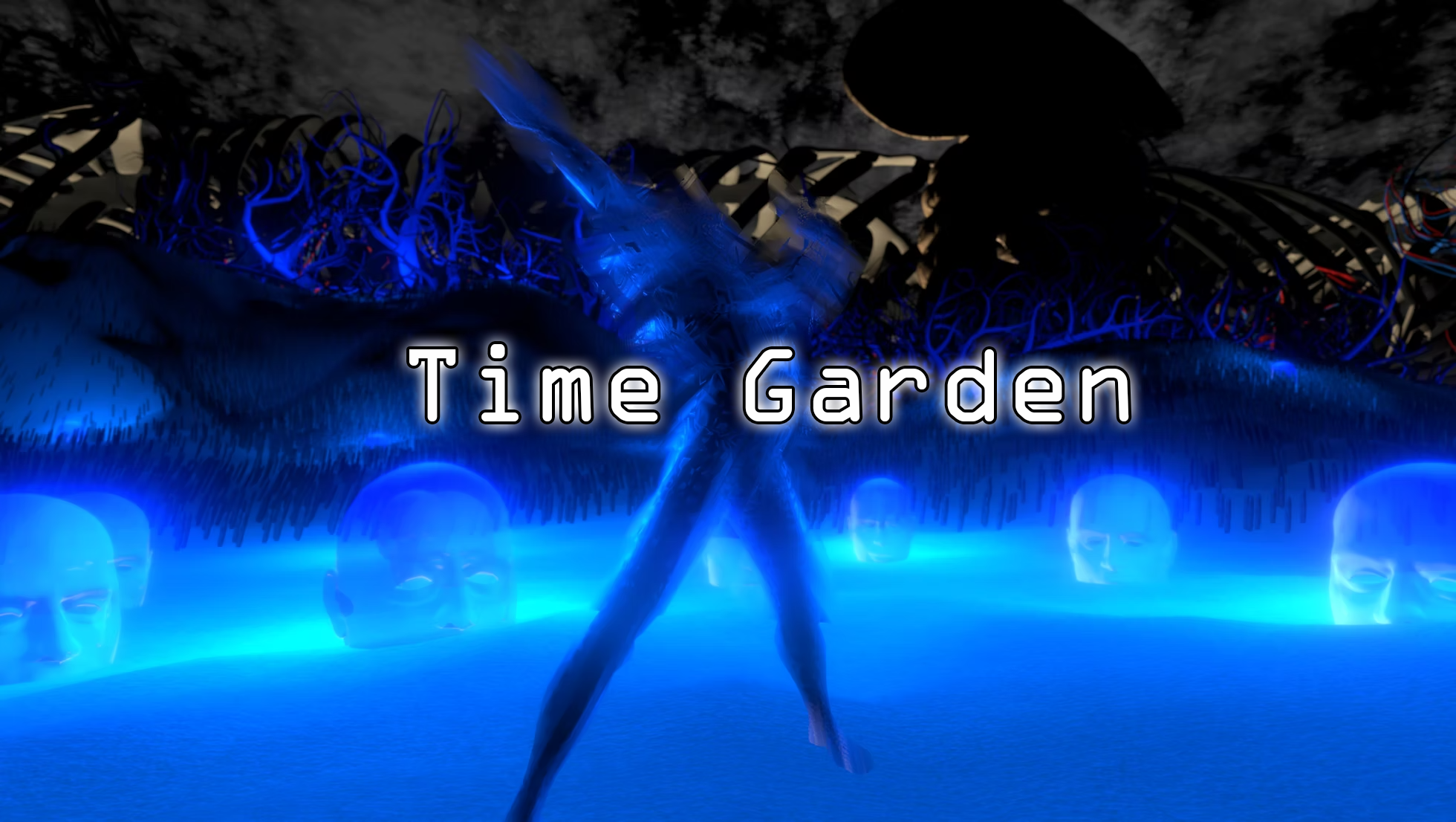
Time Garden is a suite of 3D dance animations imagining a cybernetic future in which bodies, minds, and identities become fragmented across physical and digital spaces. We speculate: what myths will our new chimeric intelligences tell? What gods will they worship? What rituals of movement will they perform in a joyful or funereal act of familiarizing and refamiliarizing themselves with sensation? The presentation details the project's technical workflow: integrating movement artist Scotty Hardwig's motion capture data into the Unity game engine; mapping that movement onto avatars navigating virtual environments built from human anatomy by Zach Duer; and transmitting the avatar data to Max/MSP, where composer Charles Nichols maps it to musical parameters to manipulate a vocal score.
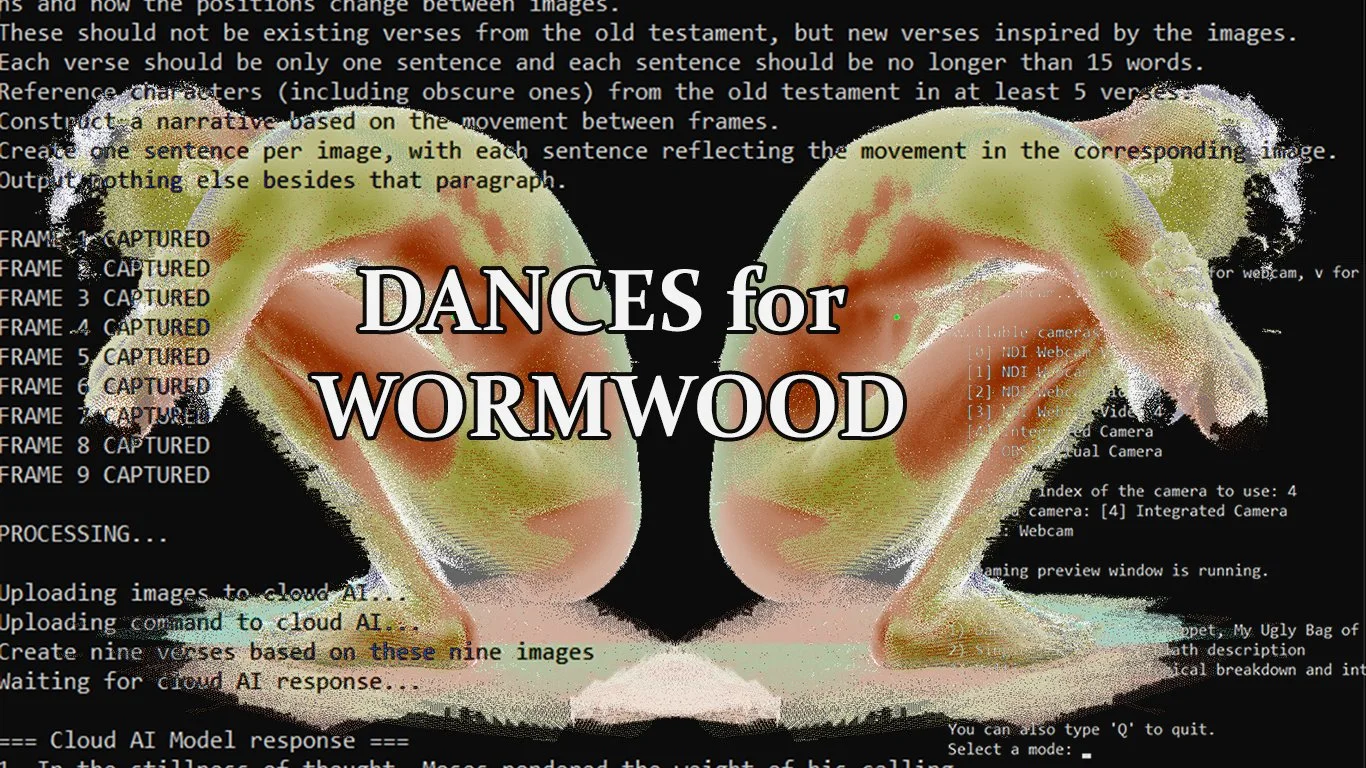
Dances for Wormwood situates virtuality and artificial intelligence within live dance performance. At midnight, a dancer embarks upon a summoning using his webcam and witching herbs. He brings forth Wormwood, a creature-system that grows in power and desire, offering divine answers to the human condition. The piece tests the possibilities and limits of large language model artificial intelligence (LLM AI) in movement performance. In this lecture, we detail how the system generates poetic and literary interpretations of the movement it observes, functioning as a witness, collaborator, manipulator, and unstable oracle.